
Sharing the Road with Farm Equipment During Harvest Season
TL;DR
-
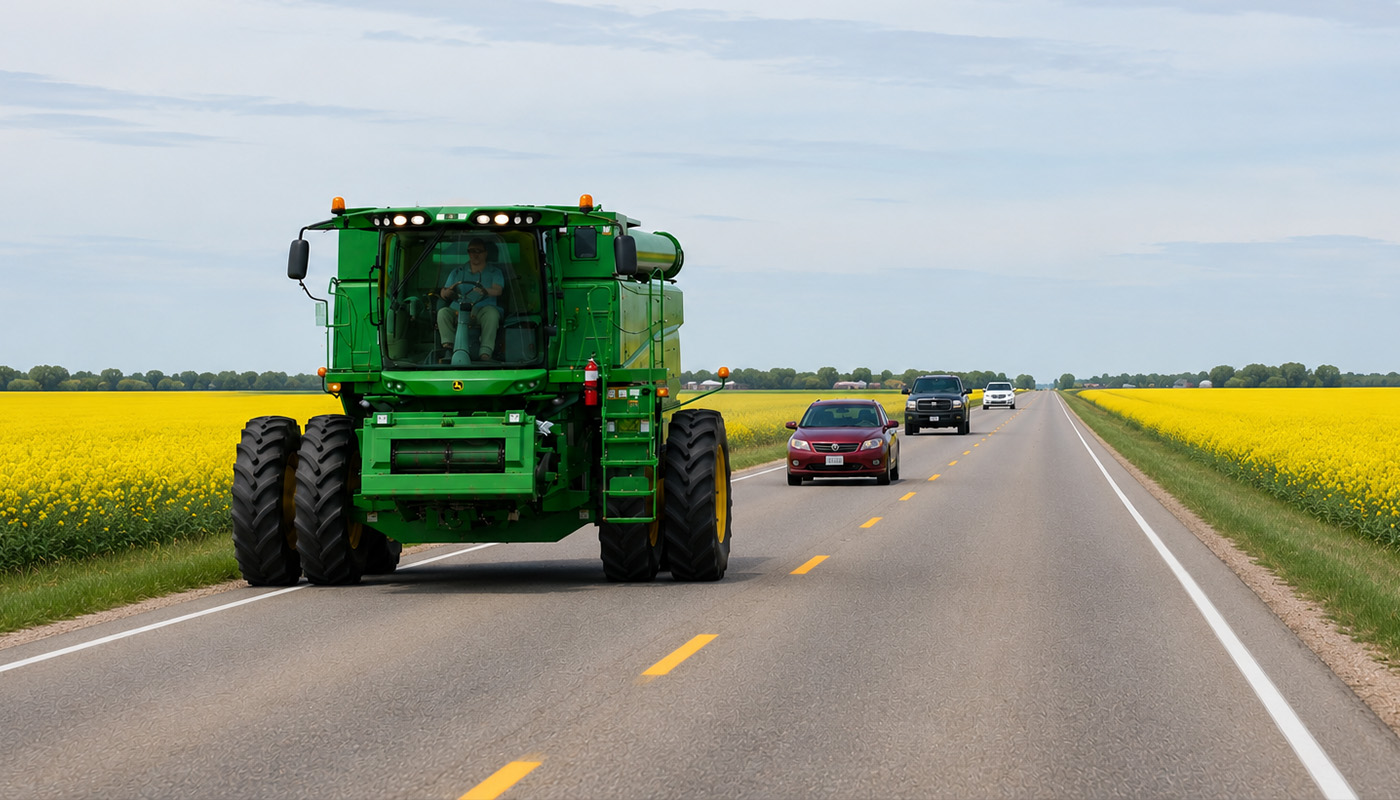
Farm equipment travels much slower than regular traffic and can be difficult to spot over hills, around curves, or during sunrise and sunset. Stay alert and slow down early.
-
Never pass unless you have a clear, legal opportunity. Farm equipment often makes wide turns and may use more than one lane, so be patient and give it plenty of space.
-
Most collisions happen because drivers follow too closely, misjudge speed, or make unsafe passes. A little patience during harvest season helps keep everyone safe on Manitoba’s rural roads.
If you spend most of your time in urban areas, encountering a large farm machine on a highway can be surprising. These vehicles move differently than regular traffic and often require extra patience and awareness.
Farm Vehicles On Highway During Harvest
Harvest is one of the busiest times of the year for Manitoba farmers.
Equipment may need to travel between multiple fields throughout the day, often using rural highways and municipal roads to get there. Depending on weather conditions and crop timing, farmers may be working long hours to complete harvest while conditions are favourable.
Unlike regular traffic, most farm equipment travels much slower, often between 25 and 40 km/h.
The speed difference is one of the biggest reasons collisions happen.
Farm Equipment Can Be Difficult to See
Visibility is a common factor in many collisions involving farm machinery.
Several conditions can make equipment harder to spot:
- Hills and blind crests
- Curves in the roadway
- Dust from nearby fields
- Sunrise and sunset glare
- Poor weather conditions
Because farm equipment is large, drivers assume it will always be easy to see. However, the speed difference often makes approaching vehicles underestimate how quickly they are closing the gap.
When driving on rural highways during harvest, looking farther ahead than usual can help identify slow-moving vehicles sooner.
Pass Only When It Is Safe
Many collisions happen because drivers become impatient.
Before passing:
- Make sure you have a long, clear view of the road ahead.
- Check for oncoming traffic.
- Pass only where passing is legal.
- Signal well in advance.
- Pass quickly but safely.
If you’re not completely sure, wait. Losing a minute is far better than risking a serious collision.
Expect Wide Turns
Farm equipment often needs extra room to turn.
You may see a tractor or combine move toward the shoulder or even slightly into the opposite lane before making a right turn.
Some drivers mistake this for pulling over and begin passing.
Never pass when farm equipment is preparing to turn.
Wait until the turn is complete before continuing.
Giving new drivers a little extra space helps everyone stay safer.
Farm Equipment May Be Wider Than the Lane
Many combines and tractors are wider than a normal vehicle.
They may:
- Extend into the next lane.
- Travel close to the shoulder.
- Require escort vehicles on some roads.
Slow down and give them plenty of space when meeting or passing.
Why Do Collisions Happen?
Many crashes involving farm machinery occur because drivers underestimate the situation.
Common contributing factors include:
- Following too closely
- Attempting unsafe passes
- Failing to notice wide turns
- Become impatient.
These collisions often happen on familiar roads where drivers become comfortable and less attentive.
Rural Highway Etiquette
Driving courteously makes the road safer for everyone.
Remember:
- Farmers are working long days during harvest.
- They are trying to move equipment safely between fields.
- Most road delays last only a few minutes.
Being patient helps everyone get home safely.
The Bottom Line
Harvest season is one of the busiest times of the year on Manitoba’s rural highways.
Farm equipment moves slowly, turns differently, and takes up more space than regular vehicles.
A little patience, extra following distance, and careful passing can help prevent serious collisions and make harvest season safer for everyone on the road.