
Why Your Tire Pressure Light Comes On Every Fall
-
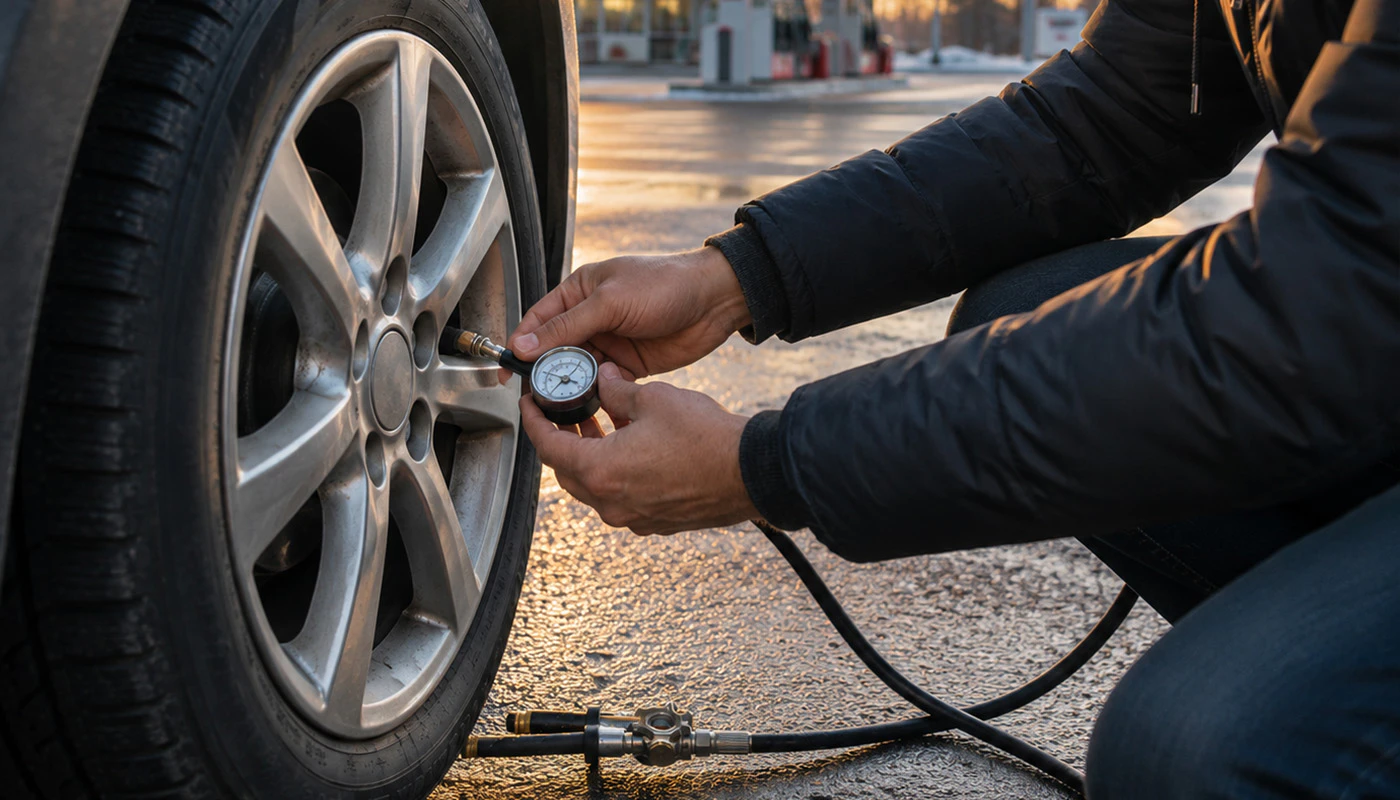
Tire pressure drops as temperatures get colder.
-
Tires lose about 1 PSI for every 5 to 6°C drop in temperature.
-
Check your tire pressure using the sticker inside the driver’s door, not the number on the tire.
-
Do not overinflate your tires for winter.
Every fall, many Winnipeg drivers notice the same thing.
The temperature drops overnight, you start your vehicle, and suddenly the tire pressure warning light appears on the dashboard.
If your tires looked fine the day before, it can be confusing. Is there a flat tire? Is the sensor broken? Or is it just because the weather got colder?
In most cases, the answer is simple. Cooler temperatures naturally lower your tire pressure.
Here’s why it happens, when you should be concerned, and what you should do next.
Quick Answer
Your tire pressure light often comes on in the fall because air contracts as temperatures drop.
As outside temperatures get colder, the air inside your tires loses pressure. Even a healthy tire can trigger the warning light after a sudden cold snap.
Most of the time, adding air to the correct pressure solves the problem.
Why Does Cold Weather Affect Tire Pressure?
Air expands when it’s warm and contracts when it’s cold.
As a general rule, your tires lose about 1 PSI of pressure for every 5 to 6°C drop in temperature.
For example, if you filled your tires on a warm September afternoon and the temperature drops close to freezing overnight, your tire pressure may fall enough to trigger the warning light.
This is completely normal.
What Is the Tire Pressure Monitoring System (TPMS)?
Most modern vehicles have a Tire Pressure Monitoring System, often called TPMS.
Its job is to alert you when one or more tires have dropped below the recommended pressure.
The system does not always tell you exactly which tire is low. Some vehicles simply display a warning light, while others show the pressure for each tire individually.
The warning light is there to help you catch a problem before it affects your safety or damages your tires.
Is It Safe to Keep Driving?
That depends on why the light came on.
If the warning appears after a cold morning and your tires look normal, it’s usually safe to drive a short distance to check and adjust the tire pressure.
However, if:
- The light begins flashing
- A tire looks visibly low
- The vehicle pulls to one side
- The warning stays on after adding air
your vehicle should be inspected as soon as possible.
Driving on underinflated tires can reduce handling, increase tire wear, and lower fuel economy.
Why Proper Tire Pressure Matters
Many drivers are surprised by how much tire pressure affects vehicle performance.
When tires are underinflated:
- Tire tread wears unevenly
- Fuel consumption increases
- Steering response can feel sluggish
- Braking distances may increase
- Tires generate more heat while driving
In Manitoba’s fall and winter conditions, proper tire pressure becomes even more important. Good tire contact with the road helps improve traction on wet pavement, packed snow, and icy surfaces.
How Do I Know the Correct Tire Pressure?
The correct pressure is not the number printed on the tire.
Instead, check the sticker inside the driver’s door jamb.
This label lists the manufacturer recommended tire pressure for your specific vehicle.
Always check tire pressure when the tires are cold, before driving or after the vehicle has been parked for several hours.
Should I Add More Air Than Recommended in Winter?
No.
Some drivers think adding extra air will compensate for future temperature drops. That’s not recommended.
Overinflated tires can reduce traction, create uneven tread wear, and affect braking performance. Always inflate your tires to the manufacturer’s recommended pressure.
When Could the Warning Light Mean Something More Serious?
Sometimes the problem isn’t the weather.
If the light returns shortly after adding air, you may have:
- A nail or screw in the tire
- A damaged valve stem
- A leak around the wheel rim
- Tire damage from a pothole or road hazard
- A faulty TPMS sensor
These issues are common as road conditions worsen during the fall and winter months.
When You Should Have Your Tires Inspected
It is a good idea to schedule an inspection if:
- You need to add air repeatedly
- One tire loses pressure faster than the others
- The warning light stays on after adjusting tire pressure
- You notice uneven tire wear
- You feel vibration while driving
A quick inspection can identify a small leak before it becomes a larger and more expensive problem.
Fall Is the Perfect Time for a Tire Check
As temperatures begin to drop, take a few minutes to check your tire pressure and overall tire condition.
Properly inflated tires help improve fuel economy, extend tire life, and provide better traction when winter weather arrives. A tire pressure warning light may seem like a minor inconvenience, but it is often your vehicle’s way of telling you it needs a little attention before the season changes.
If your tire pressure light is on or you are preparing for winter driving, our service team can inspect your tires, adjust pressures, and make sure your vehicle is ready for the road ahead.